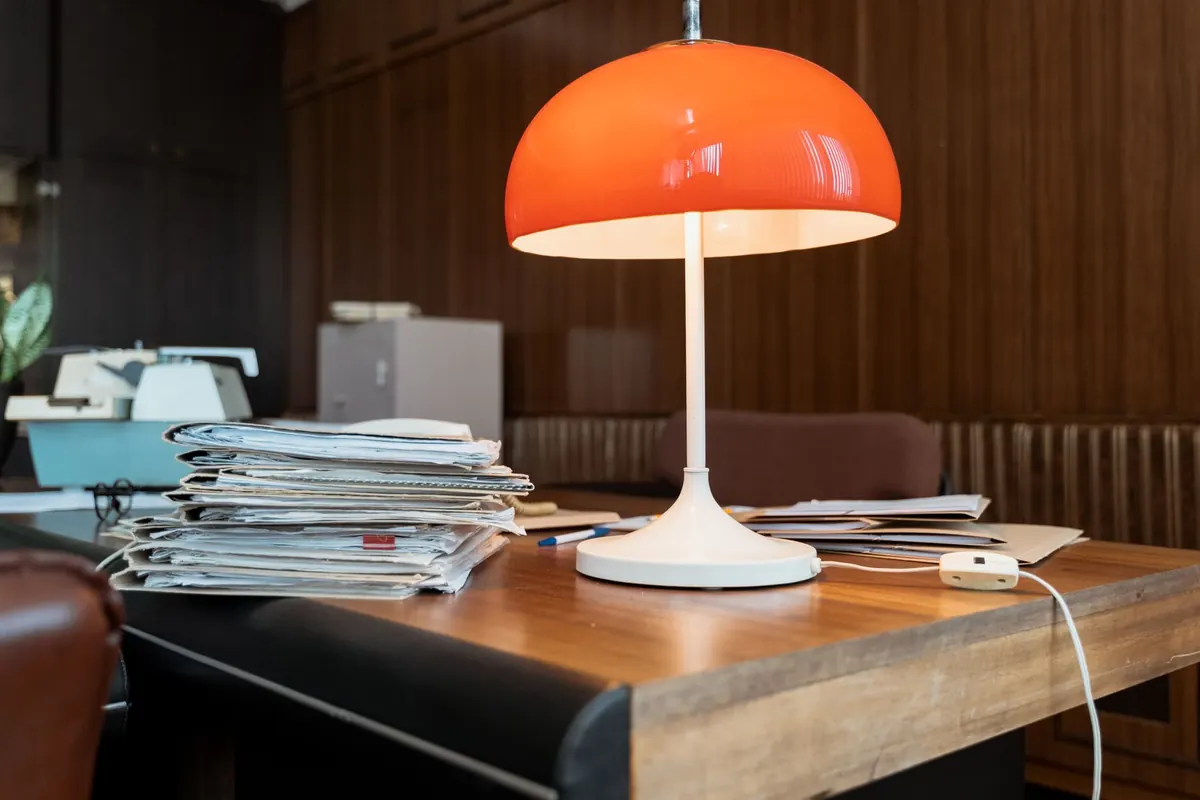
Spring Clean Your Home Office: A 30-Minute Checklist
A practical 30-minute seasonal reset for your home office: clear the desk, empty a drawer, archive paper,...

Victorian terraces give you high ceilings, deep skirting boards, a chimney breast with an alcove either side of it, and a box room that has never comfortably fitted anything larger than a single bed. What they rarely give you is floor space. So the job isn't to cram more furniture in — it's to use the parts of the room you already have and aren't using: the alcoves, the air above the desk, and the awkward corners behind doors.
Everything below assumes one thing: you want to leave the plaster, cornicing and picture rail as you found them. That rules out a few shortcuts, but it doesn't limit you much.
In most terraces, the alcoves either side of the chimney breast are the single best piece of storage real estate in the house. They're deep enough for files, tall enough for shelves, and they look deliberate once they're filled.
Measure before you decide anything. Take the width at the top, middle and bottom of the alcove and work to the smallest figure — walls in a house this age are rarely plumb, and a shelf cut to the widest measurement will either not fit or leave a gap you'll stare at for years. Check the depth at the back too, where the chimney breast return often steps in.
Then pick an approach:
Leave about 35cm between shelves if you want to stand lever arch files upright, and around 30cm for box files and ring binders. Mix in a couple of shallower gaps for paperbacks and a deeper one at the bottom for a printer or a box of cables.
A Victorian ceiling often runs to 2.7m or more. That's roughly a metre of wall above head height doing nothing at all. A floor-to-ceiling run on one wall — usually the alcove, sometimes the wall opposite the window — will hold more than a second bookcase would, and it takes up no extra floor.
Load it sensibly. Heavy things low, light things high: files and reference books at waist level, archive boxes, spare stationery and seasonal clutter up top. Above about 1.8m you're storing rather than working, so labelled boxes you can read from below beat a row of unmarked shoeboxes.
Keep a folding step stool or a slim two-step ladder behind the door. If you can't reach it comfortably, you won't use it, and the top shelves will quietly become a museum.
Most of the damage people do to period walls isn't caused by drilling — it's caused by hanging weight off lath and plaster. The plaster is a skin, often well over a century old, and it will fail long before a decent fixing does. The rule is simple: find the brick or the timber stud, and put the load there.
If you rent, or own a flat in a converted terrace, check your lease or ask the freeholder before fixing anything to the walls. If the building is listed or sits in a conservation area, speak to the local planning authority before making changes that affect the fabric of the building, including anything external. It's a short conversation that saves a long one later.
In a small room, every piece has to do two jobs. A desk with a shallow drawer and a shelf above it replaces a desk, a filing cabinet and a wall unit. A gateleg or drop-leaf table folds flat against the wall when you're not working. A low ottoman or blanket box under the window swallows printer paper, packaging and the box of cables you'll need eventually.
Two details make the difference. First, keep the desk surface clear: if the printer can live on a wheeled trolley tucked underneath, that's where it should be. Second, leave an air gap around radiators — boxing one in looks tidy and heats the room badly.
The under-stair cupboard in a terrace is usually dark, awkward and a little damp. It can work as storage if you add a light, a shelf at waist height and something to lift things off the floor. It rarely works as a desk for long, unless you're content under a low ceiling — a cupboard with the stairs above it tends to be a place for filing, not thinking.
Also look at the window recess, the gap between the wardrobe and the door, and the box room itself. A box room with a 2.4m ceiling will take a high shelf across one wall that a modern house simply can't offer.
Measure the alcoves and the wall heights. Decide what actually has to be stored — files, printer, stationery, reference books — before deciding what to buy. Fix battens or brackets into brick or stud, not plaster. Add shelves, then boxes, then labels. Live with the arrangement for a fortnight before buying anything else; the gap in your plan becomes obvious once the shelves are full.
And when you rearrange or move out, fill the old holes with a fine filler, sand lightly and touch up with the wall colour. Period walls forgive a lot, but they don't forgive a row of raw holes.
A practical 30-minute seasonal reset for your home office: clear the desk, empty a drawer, archive paper,...
A practical £300 plan for a home office, covering where to spend first, how to choose a second-hand chair,...
Oversized furniture, dark corners and visual clutter all shrink a small home office. Here are the common...